

Faint echoes, dim lights, and miles of piping covering the walls like a maze are just a few of the features of life underground at Chaminade. Beneath the classrooms in Chaminade Hall, as well as the students in the atrium and cafeteria, lies a nearly unknown mystery about the history of the tunnel system and the unique characteristics of the school. While there are still aspects of the tunnels and basement system that are used to this day, the stories that are attached to them are slowly beginning to fade away.
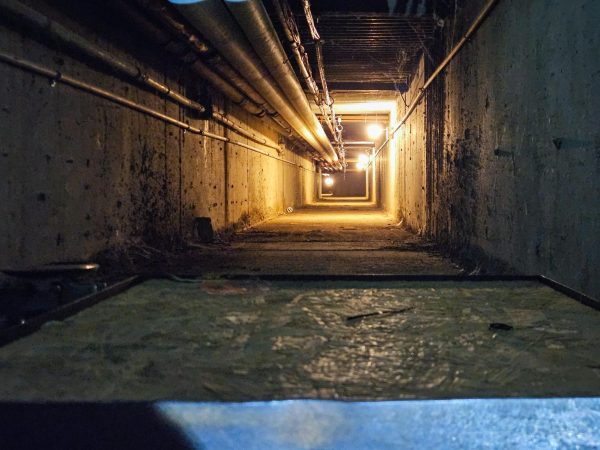
Tunnels, as facilities manager Mr. Wingbermuehle puts it, are a “broad term” for the many different alleys, passages, and maintenance lines that run beneath the school. Some are large enough for multiple people to walk through at once unobstructed, while others are small crawl spaces with crossing pipes. Their origins date back to the buildings that sit (or used to sit) atop them, and they were not all built at once. The earliest would have been needed in the 1920s with the introduction of the boiler and the desire to heat all the buildings across the campus. However, some of the later ones didn’t come about until the 1950s with the construction of the new Canning Hall residences.
Possibly one of the most usable tunnels connects the basement of Frische Hall to the current science room in 002. It is in one of the best conditions, fully lined with smooth concrete, and has most of the utilities out of the way in the corners. However, why would you need a tunnel between two places that are connected with hallways? You would need them if the hallways never existed which was the case before the 1990s. In 1956, Canning Hall was built, and the Marianist Brothers were living in Frische Hall. The students had been moved out of Chaminade Hall which they had been living in since the school was built. With the rooms and facilities now being spread out across the campus, that meant there would be a lot of walking outside. There was a desire for an easier way to access the school buildings, especially the old cafeteria, which was located in the basement of Chaminade Hall. The Brothers needed access to it three times a day, so an easy way to get there without ever going outside was ideal.
Bro. Eppy described that “It was a driveway all the way around the building. So, to keep the brothers from having to go outside in bad weather or constantly crossing the driveway just to get to the dining room, they put that tunnel in.”
This access point might have been “initially an expensive purchase” as Mr. Wingbermuehle mentioned, but it was worth it to maintain the utilities that ran between the buildings and provide the Brothers with a nice quality of life feature.
The Brothers back in the ‘50s and ‘60s were a vital part of the school system. They filled in many of the roles that we have today that are filled by laypeople. Teachers, prefects, maintenance, and kitchen roles were all filled by Brothers. This also brought the need for tunnels to connect Frische to Canning Hall.
Bro Eppy explained it by saying, “Some of them [Brothers] had rooms here [in Frische] and some of them didn’t. And so they would be on duty for two hours in the dorm and then switch to give the Brothers who lived in the dorm a chance to relax or do something. There would be constant motion, you know, a connection between those two.”
However, there was even more meaning to this tunnel that connected to the dorms. The dorms didn’t have their own independent utilities, and they needed a connection to the utilities in Frische.
While utilities can be installed underground without access, the early metal piping that was used was not very durable, and it would constantly need to be replaced or fixed. Having to continually dig up roads and ground to fix this was more expensive than the initial cost of the tunnels. This was the case with the third major tunnel between the boiler room in the west wing and Juergens Hall. This tunnel is tight and difficult to walk through, but that was never the purpose. It runs under Cemetery Lane and is instead solely a utility access point.
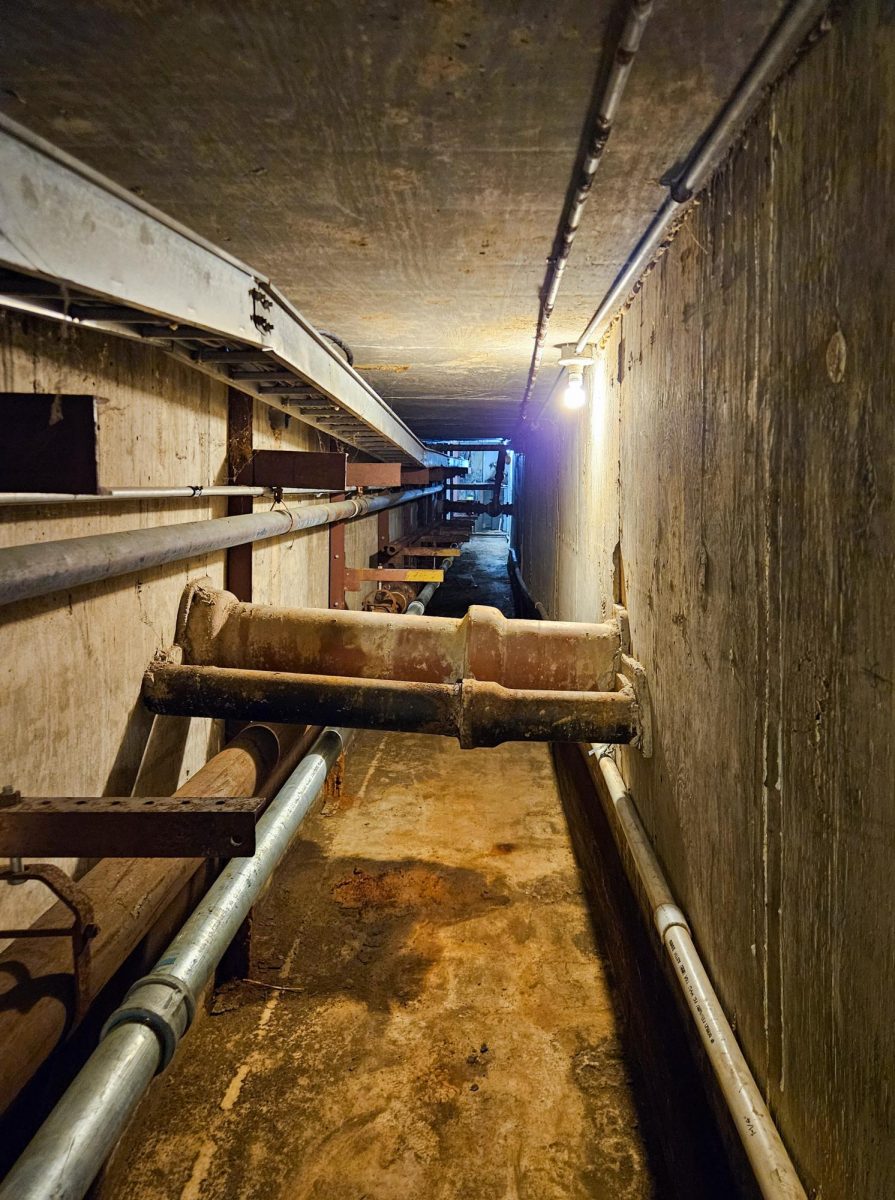
Mr. Wingbermuehle mentioned that Chaminade was originally “going to use this one big boiler now to heat the entire campus, which is why you’ll see all these pipes going everywhere. Then they kind of got away from that philosophy, so now it [the boiler] just takes care of the west wing.”
Since the era of the tunnels, new buildings have been constructed across campus, but none of them have their own tunnels. Part of the reason is that these buildings have their own dedicated facilities as is the case with the renovated chapel and Marianist Hall.
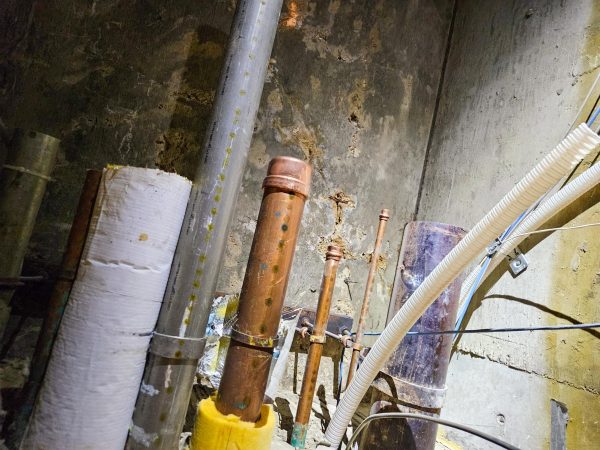
However, one of the biggest reasons is that “a lot of the water lines are plastic. So they can bury that stuff correctly in the ground, and they don’t have to worry about it rusting or anything like that,” as Mr. Wingbermuehle explained.
Finally, located around a big loop around Frische Hall are crawl spaces with the heating components for all the rooms. These spaces are only a few feet wide and a couple of feet tall, but they are still needed for access. If you walk around Frische, you may notice these spaces along the ceiling of the rooms. While these tunnels may seem minor and unimportant, they have a greater story to them.
Mr. Wingbermuehle explained that “Brother Irv, in all these tunnels, Canning had them too, he built these little ‘skateboards.’ They’re basically little backboards,” that you can use to slide along in the crawl spaces so as not to crawl on your stomach or back.
Brother Irv was a previous Marianist Brother who gained an interest in welding as a hobby. While he built a lot of useful things for the school, Mr. Wingbermuehle joked that “Brother Irv never built anything lightweight. Everything he did was heavy-duty.”
So, there is a good chance that a lot of it is still around today.
Overall, most of Chaminade’s tunnels have been left behind in history. Some have active utilities flowing through them, but none of them are used in the same ways as they used to be by the Brothers. Instead, they are being left to rest, closed off, and locked away, as life at Chaminade continues to evolve above ground.